166 years later, John Brown’s soul goes marching on.
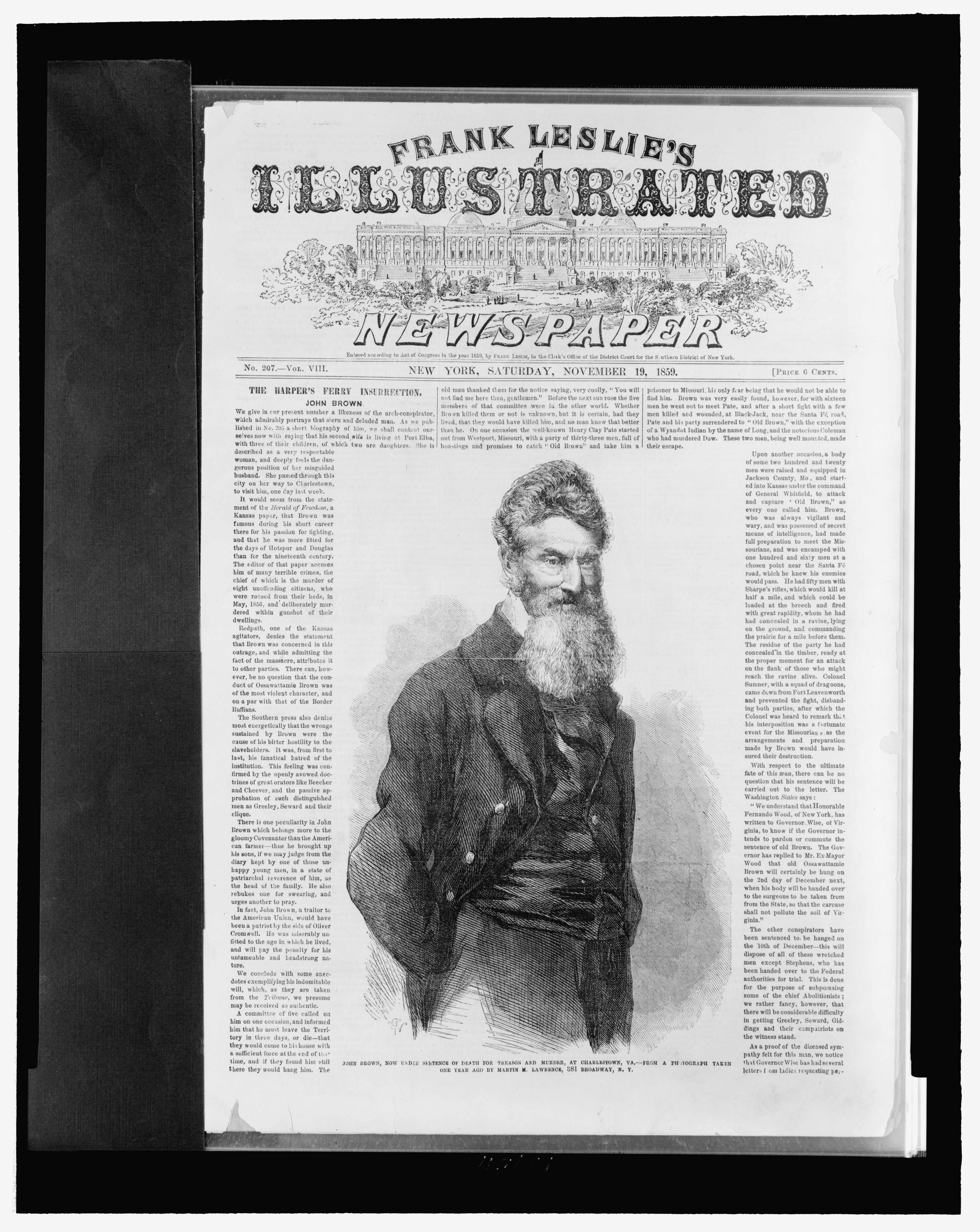
One hundred and sixty-six years ago this weekend, abolitionist John Brown led a small band of 18 men to the federal arsenal town of Harpers Ferry at the confluence of the Potomac and Shenandoah rivers. His plan was to seize the town, the arsenal and rifle works and to incite a slave insurrection in order to topple the hated institution of slavery.
The previous year he had convened a meeting in Chatham, Ontario to adopt a provisional constitution for the free republic he hoped to establish in the Blue Ridge mountains of Virginia. From there, he planned to wage guerilla warfare on the valley plantations below, freeing slaves and vanquishing slaveholders. Ultimately, it would take a bloody civil war to accomplish his goal
The raid, which began on the evening of Oct. 16, 1859, succeeded in its immediate goals but ultimate failed to achieve its long-term objective–without the fratricidal conflict his raid was said to have sparked. There would be no largescale uprising of the enslaved, but not because, as some claimed, the slaves were happy with their lot and loyal to their masters. Brown had moved up the date of the raid as word had gotten out around the countryside, but word of the delay did not reach the Blacks he hoped to recruit.
There were other tactical reasons: Brown took hostages, including the grand nephew of George Washington, but he indulged them by allowing them to visit their relatives outside the arsenal fire engine house that had become a redoubt for John and his men. He then allowed an eastbound train that stopped at the Ferry to pass through, and, downriver at Monocacy Junction, the engineer alerted the feds. Ninety marines under Col. Robert E. Lee were dispatched to end the insurrection.
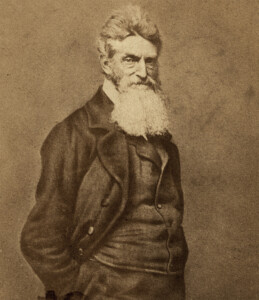
Within 36 hours, it was all over. Of those comprising John Brown’s tiny army, ultimately there would be but one survivor, Osborne Perry Anderson, one of five African Americans, who wrote the only insider account of the raid. Of the other four, Lewis Leary was mortally wounded as he sought to escape across the Shenandoah, John Anthony Copeland and Shields Green were captured, tried, convicted and executed by hanging on Dec. 16. The fifth, Dangerfield Newby, was cut down by a railroad spike shot from an upper window of a building in the lower town, then mutilated by angry townspeople and left for the hogs that feasted on him. Brown was captured, tried, convicted and hanged on Dec. 2, 1859, his last words a searing forecast that the sin of slavery could be “purged away” except by blood.
The judge and jury who oversaw the trials of Brown, Copeland and Green were all slaveholders. If the raid did not incite a slave insurrection, it’s noteworthy that in the aftermath of the trials and executions, barns belonging to the jurors were torched. It seemed that, belatedly perhaps, the enslaved of Jefferson and Berkeley counties in what’s now West Virginia had gotten the memo after all.
The story has been told and retold over the decades, though the five African Americans with Brown were treated, if at all, as footnotes, rarely named much less given a full and fair treatment even by historians sympathetic to their legendary leader. In my book Five for Freedom: The African American Soldiers in John Brown’s Army I have tried to rectify a wrong and give them their due.
Five for Freedom was first published in June 2018, during the first presidential administration of Donald J. Trump, at a time when the country was becoming increasingly polarized over race, as it had been in the antebellum period leading up to the raid. In reaction to the police murder of George Floyd in Minneapolis, the Black Lives Matter movement gained national attention and adherents. My message in many forums was Black history is American history and that as a country we will never achieve our aspirational goal where out of many we are one unless and until we acknowledge and own our history–all of it and all of us.
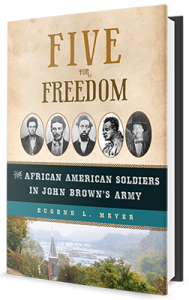
John Gilstrap, a best-selling author of thriller and suspense novels, invited me to be on Eastern Panhandle Talk Radio, WNRN, a West Virginia station on this historic anniversary weekend. To listen to the interview, find it on the station’s YouTube channel by clicking here.
Today, the country seems even more divided, as the second Trump administration seeks to rewrite and erase the shameful parts of our history, the original sin of slavery and its centuries-long after shocks. At Harpers Ferry National Historical Park, a dozen books have been flagged for removal pursuant to President Donald J. Trump’s orders to delete anything that smacks of “diversity, equity and inclusion.”
The hard-won gains from the civil rights movement are being undone by executive fiat and a complicit Congress and Supreme Court. It is no less than the dismantling of the Second Reconstruction occurring right before our eyes. Deja vu, all over again. In the 1850s, slaveholders and their supporters denounced John Brown and the “five for freedom” as no more than terrorists, the “antifa” of their day.
But to others, Brown was a hero, and he and his raiders were imbued with the righteous religious fervor the times called for, and, if their methods seemed extreme, their cause was no less just. As Republican Senator Barry Goldwater famously said during his 1964 presidential campaign: “Extremism in the defense of liberty is no vice. Moderation in the pursuit of justice is no virtue.”
John Brown’s body still lies a moldering in the grave, but 166 years on, his soul and his spirit go marching on.
What to say but “Glory, glory, hallelujah.
His truth is marching on.”
Thanks.
I applaude your continued endeavor to erase discrimination and racism.
Hi Gene, thank you for continuing to remember John Brown and his men. Hope you’re well.
You have brought John Brown to life. Well done.