The Jackson Heights Saga Continues
Instead, the treatment was a body cast from my chest down to my left toes. And there I lay, more or less imprisoned for more than a year. When at last the cast came off, I couldn’t walk. I couldn’t even crawl. But across 89th Street from the apartment was a vacant lot, which I called “the dirty corner.” There I managed to scoot along on my bottom. I will never forget the first time I bent the left knee, when a neighborhood kid accidentally bumped into it. I was on the floor in our apartment, and it was excruciatingly painful—but necessary.
At age six, I would have to relearn to walk. At first, I grabbed onto the top of the dresser to move about. When we moved into a small ranch house in Nassau County in 1949, on moving day I clung to the walls in the hallway to the elevator to keep from falling. In time, I walked again but would never be an athlete, unlike my pal Paul Guglielmino who also had Legg Perthes but recovered with crutches instead of a cast.

Leaving Jackson Heights, Queens
It was a big step up for my family when on July 1, 1949, we moved from that one-bedroom apartment in Jackson Heights to a three-bedroom house “on Long Island,” a geographical name I’ve never understood since both Brooklyn and Queens are also on Long Island. There was no Long Island Expressway. We drove east on Horace Harding Boulevard, named for a prominent banker who helped finance its construction. (It is now the LIE service road). I remember riding in a black sedan but not who drove us to our new home at 6 Wellington Road.
Wellington Road was right off Northern Boulevard (25A), then a rural two-lane road, with wide shoulders and a country store on the corner at Glen Cove Road. There was a small farm owned by the Potapinski family and not much else, later a Pathmark supermarket. The post office was then in a small space adjoining the Cavoti drug store east of Glen Cove Road. I think there were only mailboxes, not home delivery.
Our house had a front lawn! With a white birch bark tree. And a backyard! It was in a small, postwar subdivision of California-style “ranch” houses, built in 1947 initially for veterans. The house lacked a basement but had radiant heating in the floor and a cathedral ceiling that vaulted above the combined living and dining area. It had three bedrooms and one bathroom. A palace!

It was a ten minute walk to the Long Island Railroad station, which was convenient for my commuting father since we did not have a car for the first two years. Even then, he would ride the LIRR, change at Jamaica to another train bound for Brooklyn, where he wrote radio scripts for WNYE-FM, performed by “high school students of the air.” His scripts won awards as he pioneered the field of educational broadcasting.
Our post office was Greenvale, although some people still called it Bull’s Head, after a rowdy tavern that existed there in the 1920s. We were in an unincorporated part of North Hempstead township. There was another Greenvale, adjacent, in the ritzier township of Oyster Bay, home to Gilded Era barons. Many of the closest Greenvale families were Italian and Polish, immigrants who worked as maids and gardeners on the big estates. There was a Memorial Hall in Greenvale, a gift of telegraph magnate Clarence Mackay, to the community. The Polish and Italian kids went there for catechism classes. Residents had only to pay a nominal annual amount to the township. But one year it wasn’t paid. The hall was replaced by a Burger King.
On our side of the township line was Harbor Hill, the Mackay estate. Clarence Mackay’s daughter Ellin married Irving Berlin, much to the chagrin of her antisemitic father. By the time we got there, the mansion was a ruin and eventually the expansive grounds were carved up to become the upscale Country Estates, houses selling for (gasp!) $30,000.
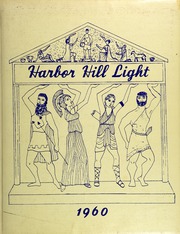
Before then, the formerly occupied estate — Mackay had gone bankrupt and had to sell his precious art and antiques — was noted for its rhododendrons. When I was a Boy Scout in Troop No. 1, said to be oldest in the county, we built campfires and baked potatoes in tin foil there. My high school newspaper was the Hilltop Beacon, and my 1960 yearbook was The Harbor Hill Light. Our mascot was a bulldog. Our school cheer was “Go, Bulldogs!” Its origin or what it might have had to do with Roslyn, Harbor Hill or the Mackay estate remains an enduring mystery.
Gene: What a fascinating reminiscence. A little boy’s jounrey. “Our house had a front lawn!… A palace!”
Thanks for the interesting personal history. Hopefullly, health care has improved in the intervening years.
I grew up in a working-class, white town in Central Jersey- Exit 11- which is now 80% ethnic Indians from the state of Gujarat. The schools are much better than in my day.